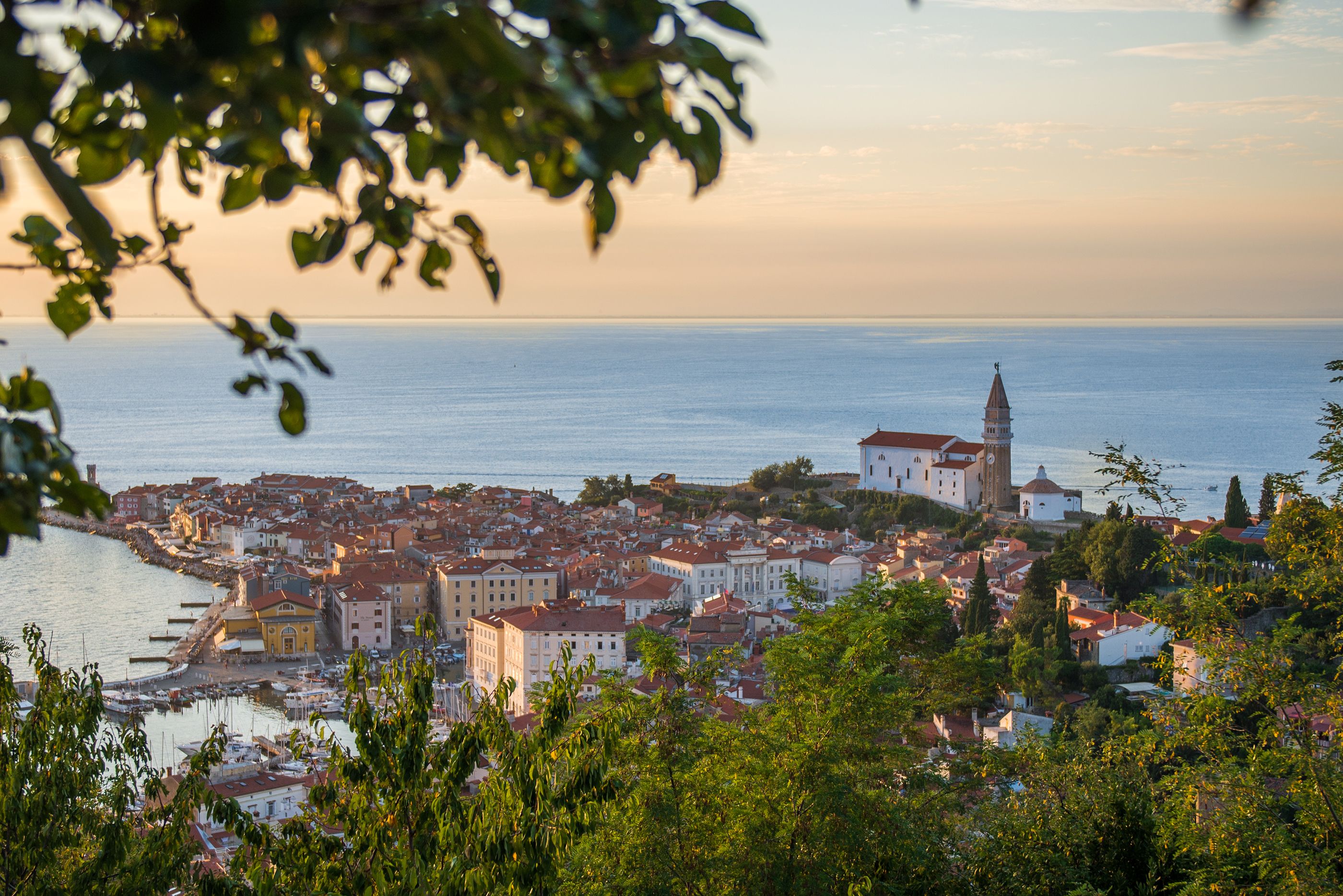
By six in the evening the day-trippers have gone. The buses that idle at the edge of the old town pull away toward the resorts, and Piran exhales. What is left is a town returned to itself: fishermen coiling ropes, children chasing a ball across Tartini Square, the smell of grilled fish drifting up the narrow lanes.
A Venetian ghost on the Adriatic
Piran sits at the tip of a needle-thin peninsula, its streets pressed so tightly together that the sea appears at the end of them like a surprise. For four hundred years this was Venetian territory, and the town never quite let go of it. The shuttered windows, the worn marble, the lion of St Mark carved above a doorway — it is Venice distilled to a single, walkable point.
What it does not have is Venice’s crowds. There is no entry fee, no timed ticket, no queue. There is only the town, and the light, and the water.

The rhythm of the quay
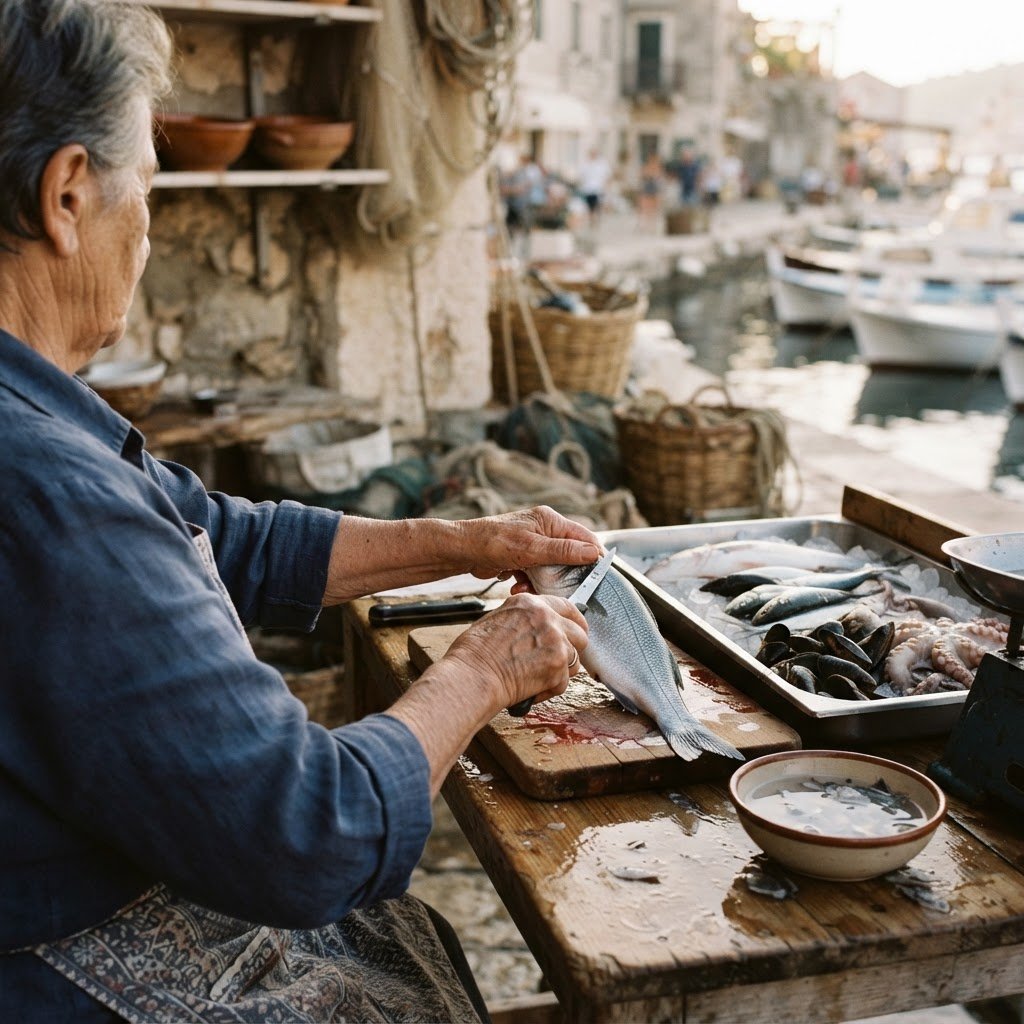
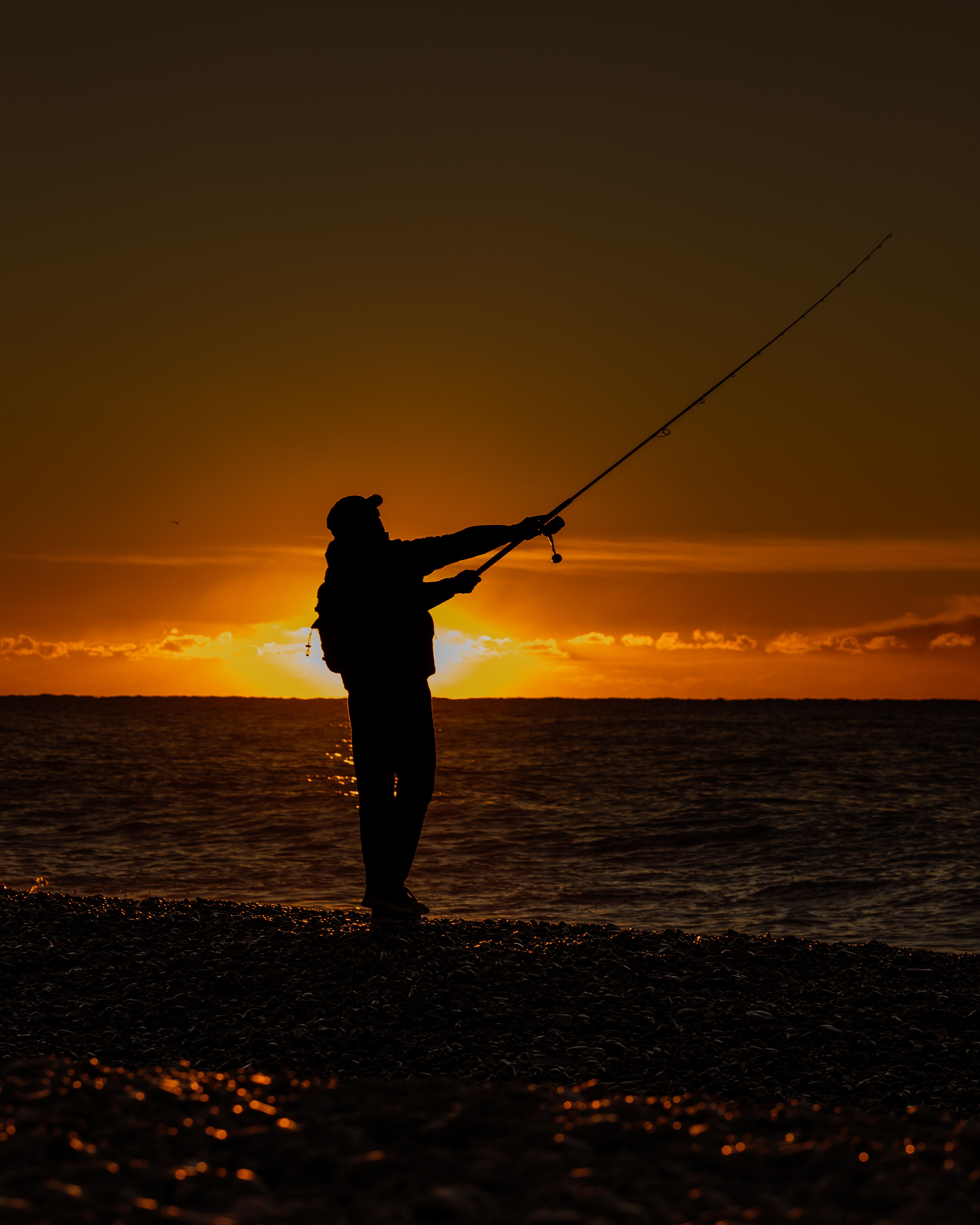
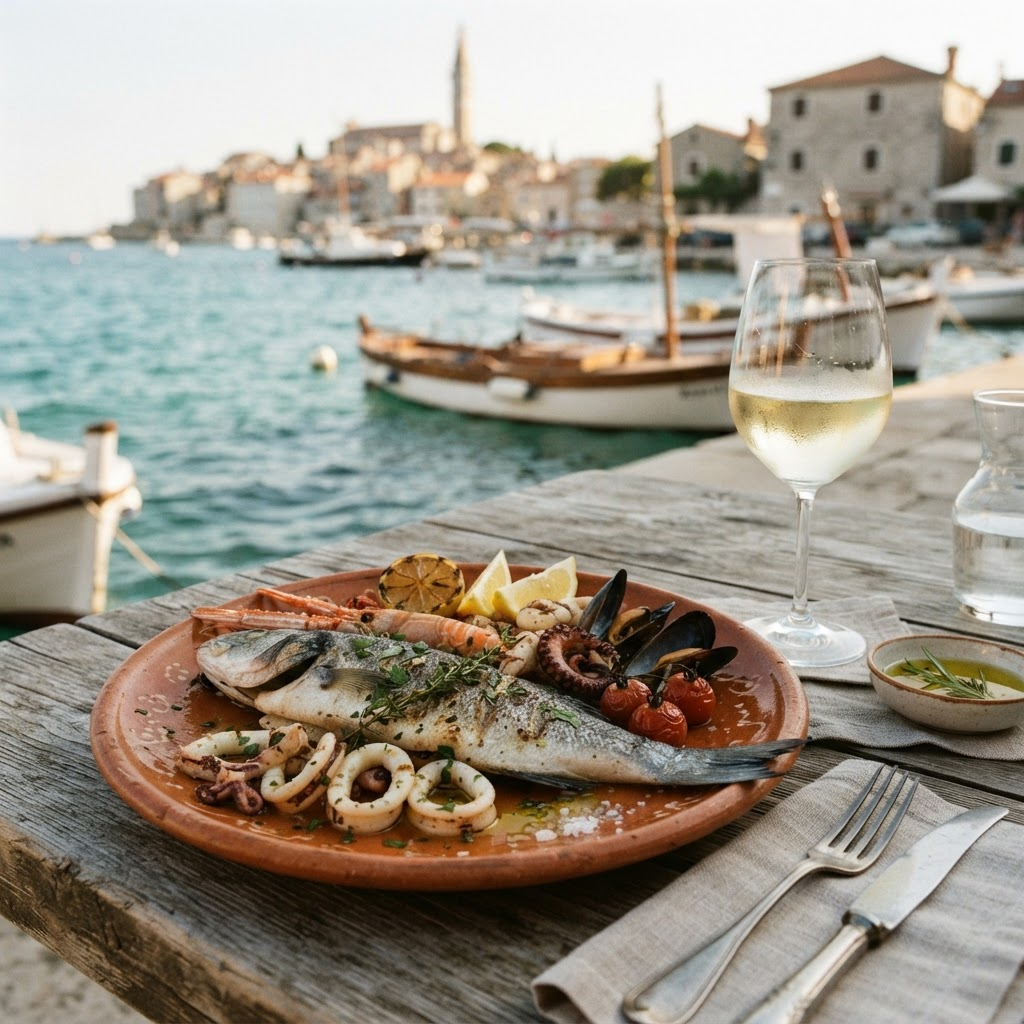
Life in Piran organises itself around the harbour. In the morning the fish comes in; by midday it is on the ice at the market; by evening it is on the grill at a dozen family konobas along the quay. Order the catch of the day and a glass of local Malvazija, and you have understood the town’s entire philosophy in one sitting.
Insider notes
- Climb to the town walls an hour before sunset for the best light over the rooftops.
- Skip the seafront restaurants on the square; the best kitchens are a lane or two back.
- Stay the night — Piran only reveals itself once the day-trippers have gone.
Keep reading
Collection
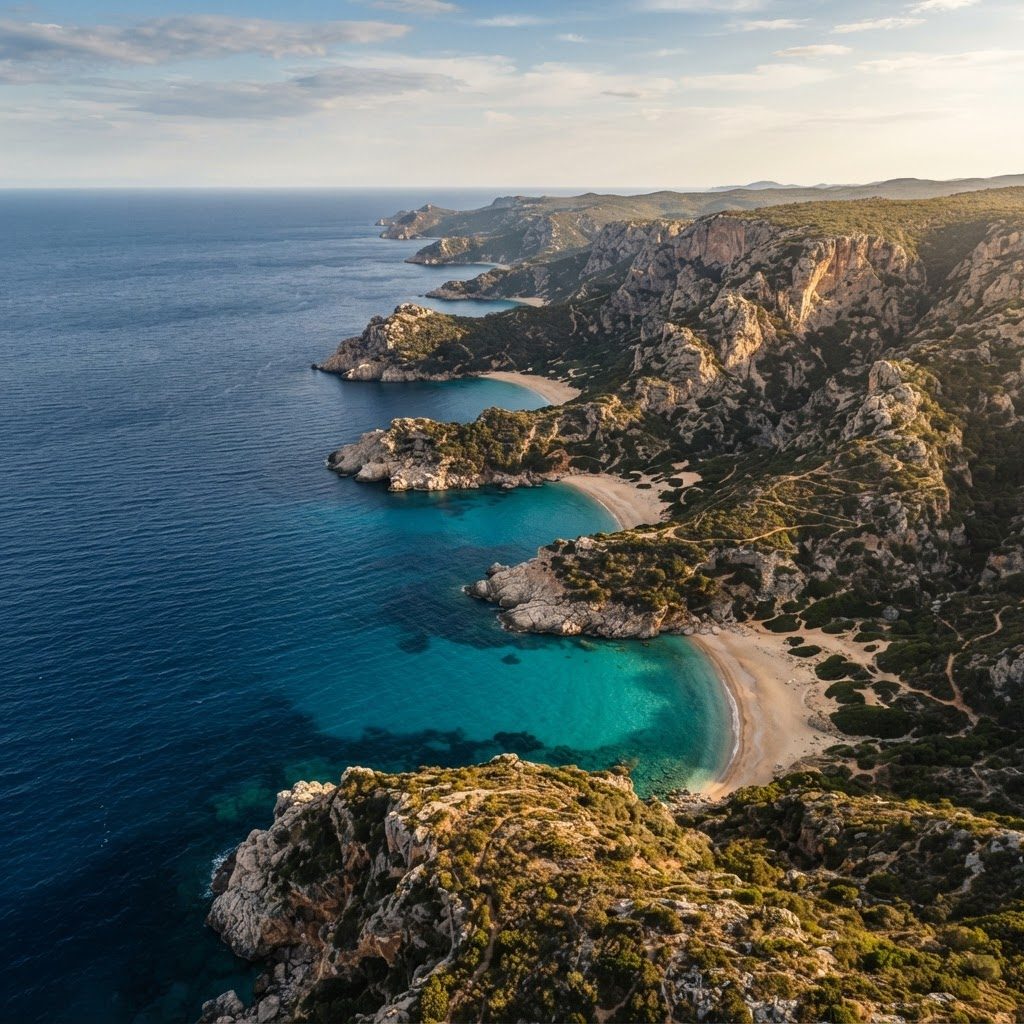
Ten Hidden Beaches on the Adriatic
From Albanian coves to Montenegrin bays, a collection of shorelines the guidebooks still haven’t caught up with.
Collection
Twelve Medieval Towns Worth the Detour
Walled cities, cave dwellings and stone lanes — the old hearts of Europe that never made the tourist trail.
Travel guide
The Hidden Villages of Slovenia
Beyond Lake Bled lies a country of alpine hamlets, emerald rivers and stone-built villages where the pace has barely changed in a century.