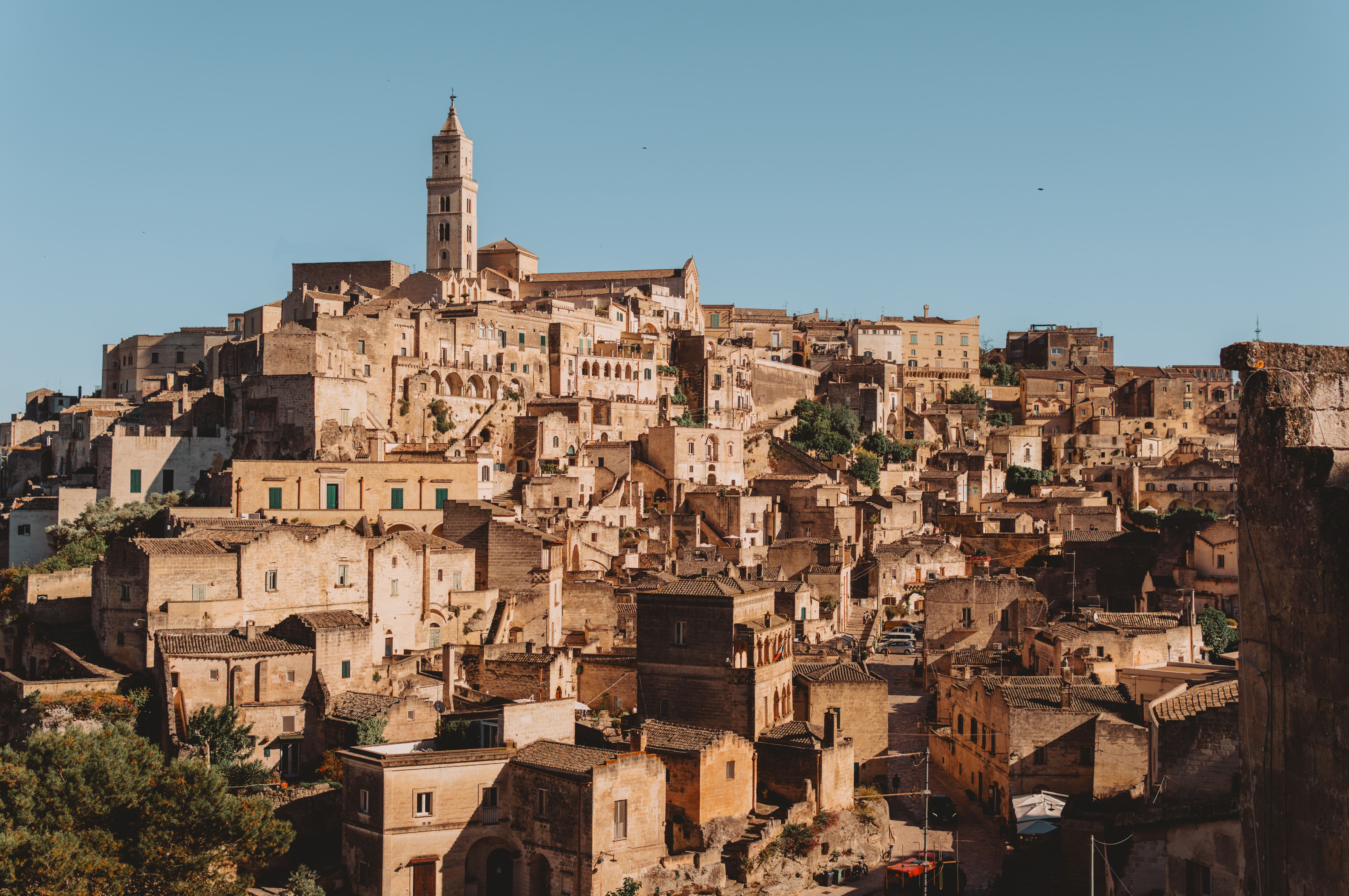
In Matera, the boundary between the city and the landscape is difficult to find. Streets, homes, churches and restaurants appear to have been carved directly from the pale rock of the hillside.
By evening, that stone changes character. Warm lights spill from the cave dwellings and the ancient Sassi become less like a historical site and more like a living neighbourhood.
The Sassi after sunset
During the day, Matera can feel like an open-air museum. At night, the atmosphere changes completely. The streets empty, the stone catches the warm light and the layers of the city become easier to appreciate.
This is the moment to wander without a destination. Follow the steps through the Sassi and let the city reveal itself gradually.
Dinner inside the stone
Some restaurants occupy spaces that were once homes, workshops or simple caves. Sitting down for dinner in one of them makes the history of Matera feel unusually immediate.
The experience does not need to be elaborate. Local ingredients, regional wine and the texture of the cave around you are already enough to make the evening memorable.
Stay for the walk home
The best part may come after dinner. Without the daytime crowds, the old streets become quiet again and the city lights pick out the edges of the ravine and the ancient buildings.
Take the long way back. Matera is one of those places where the walk itself becomes part of the evening.
Insider notes
- Explore the Sassi after sunset when the atmosphere changes completely.
- Book dinner ahead if you want a table inside one of the cave restaurants.
- Leave time after dinner for an unplanned walk through the old streets.
Keep reading
Seasonal guide
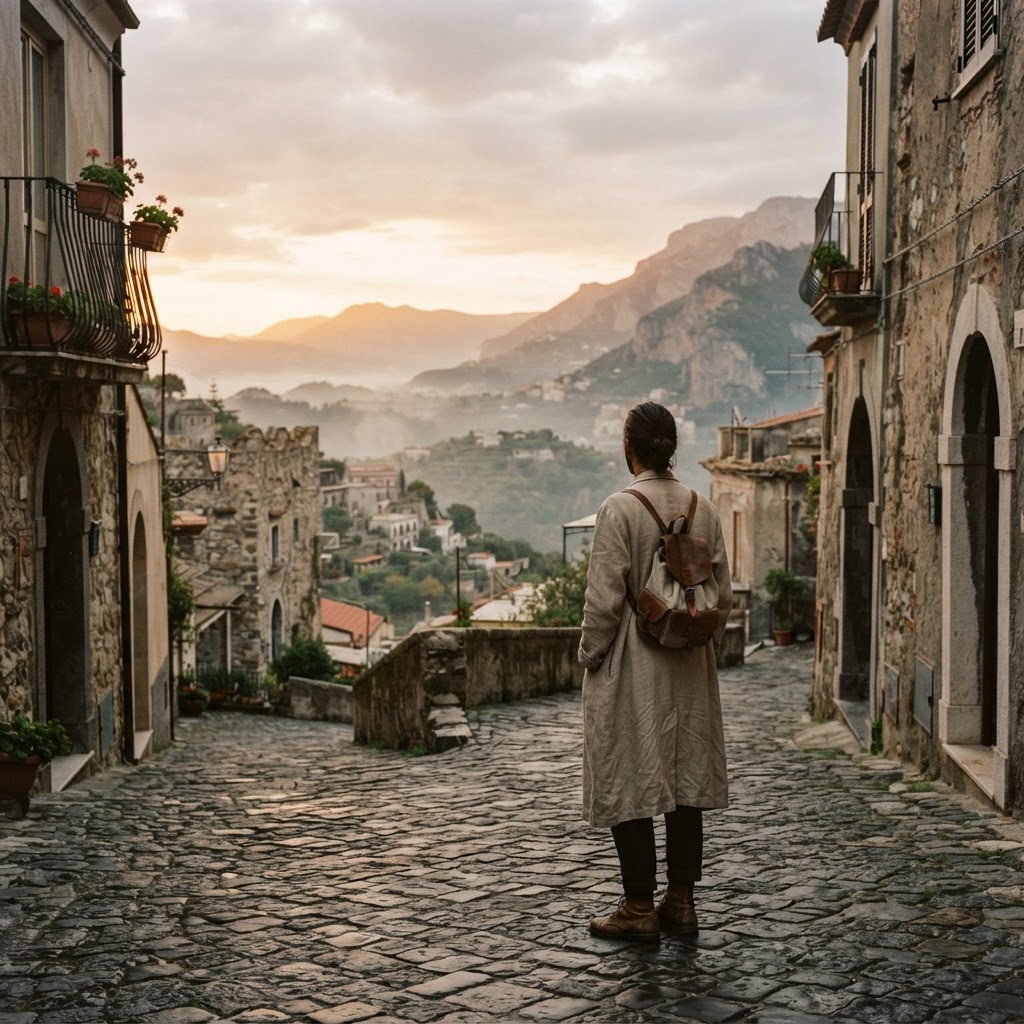
Where to Travel in Autumn
The crowds thin, the light turns gold and the kitchens fill with the harvest. Our guide to Europe’s finest season for slow travel.
Collection
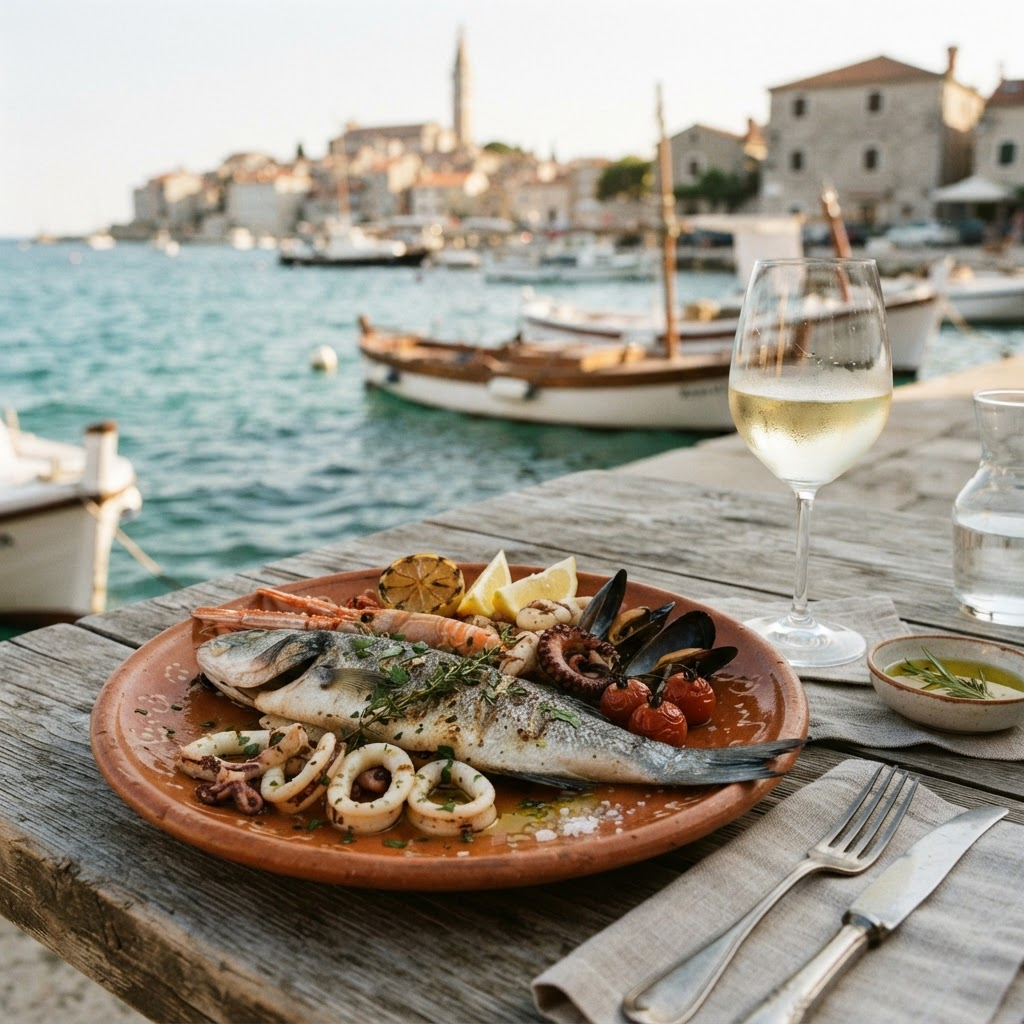
Twelve Medieval Towns Worth the Detour
Walled cities, cave dwellings and stone lanes — the old hearts of Europe that never made the tourist trail.
Seasonal guide
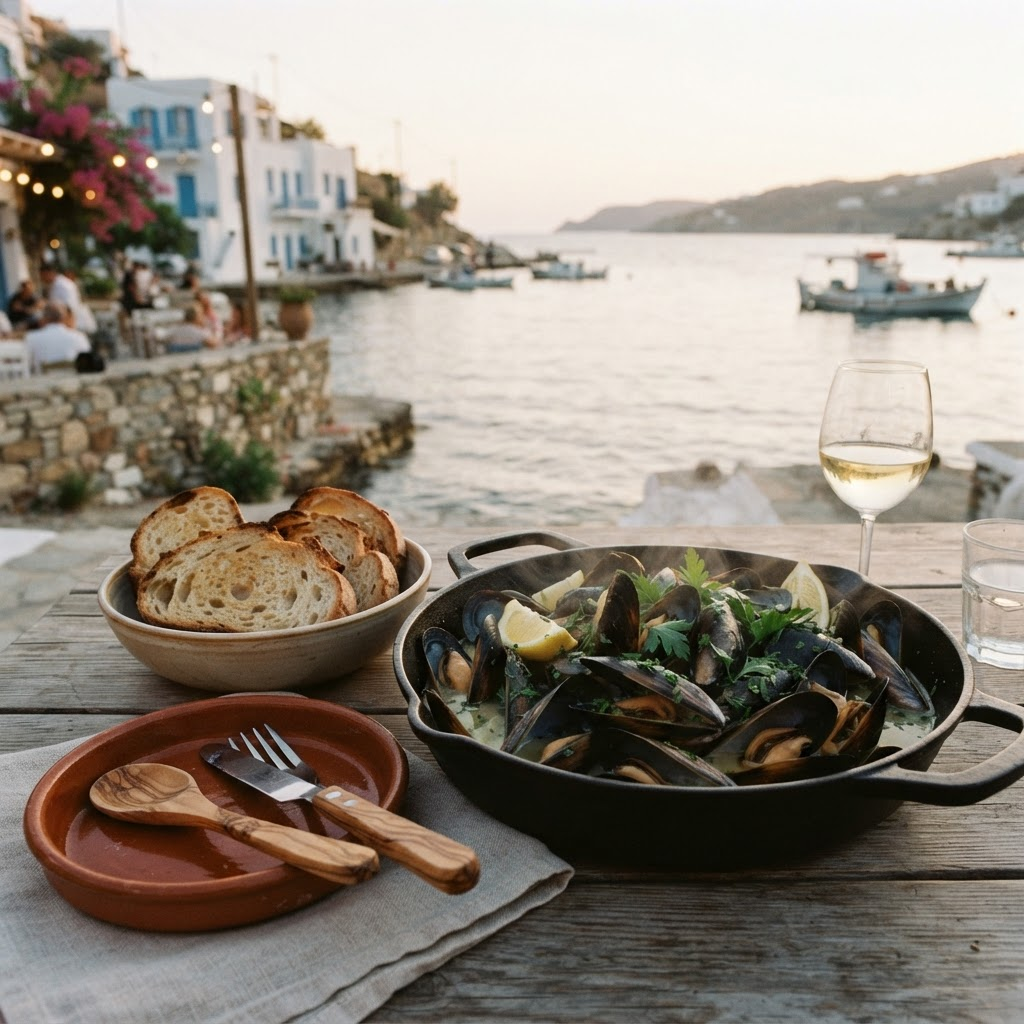
Winter Escapes Off the Radar
Quiet mountain villages, thermal springs and cave towns lit against the dark — where to find warmth in Europe’s low season.